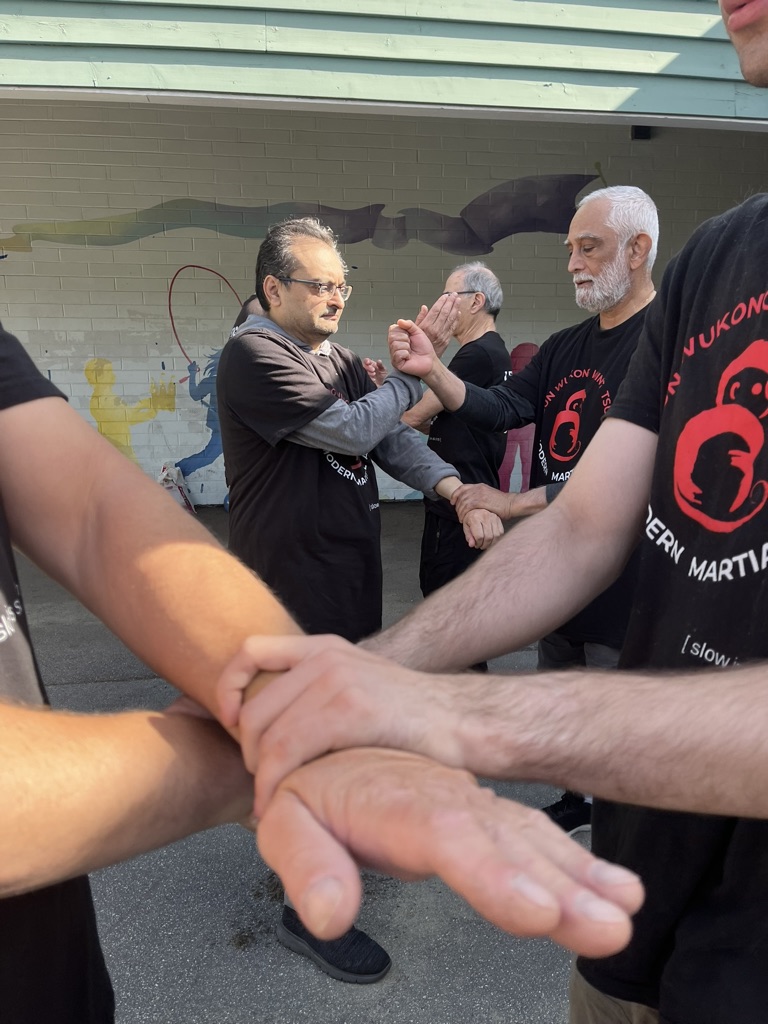
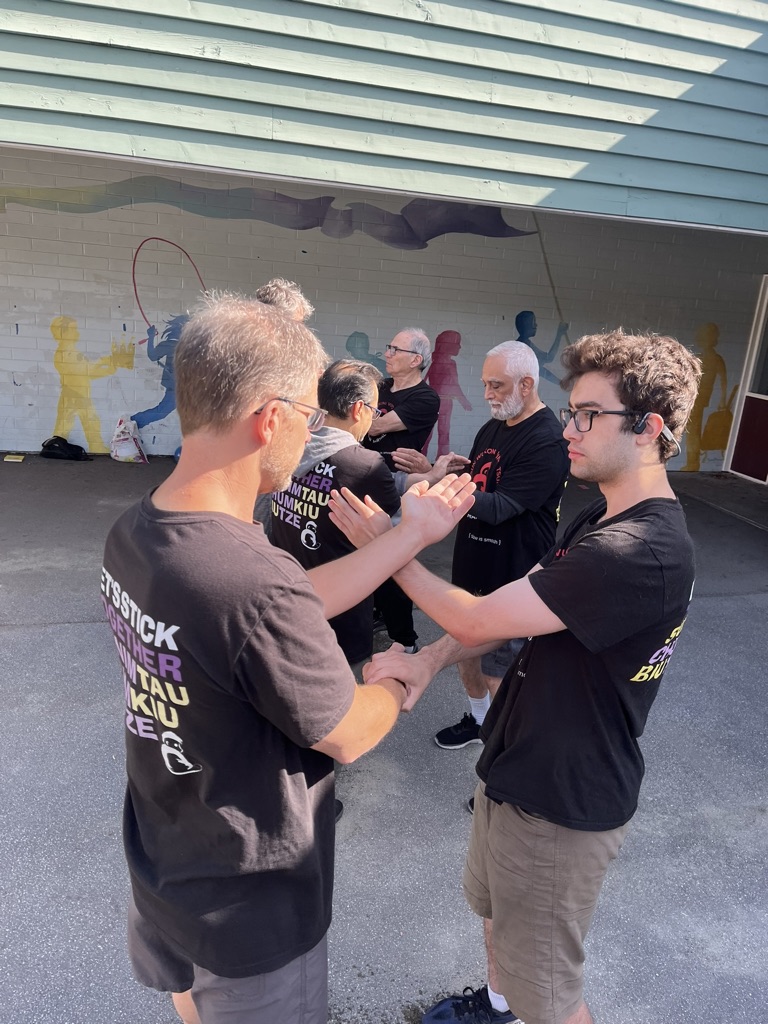
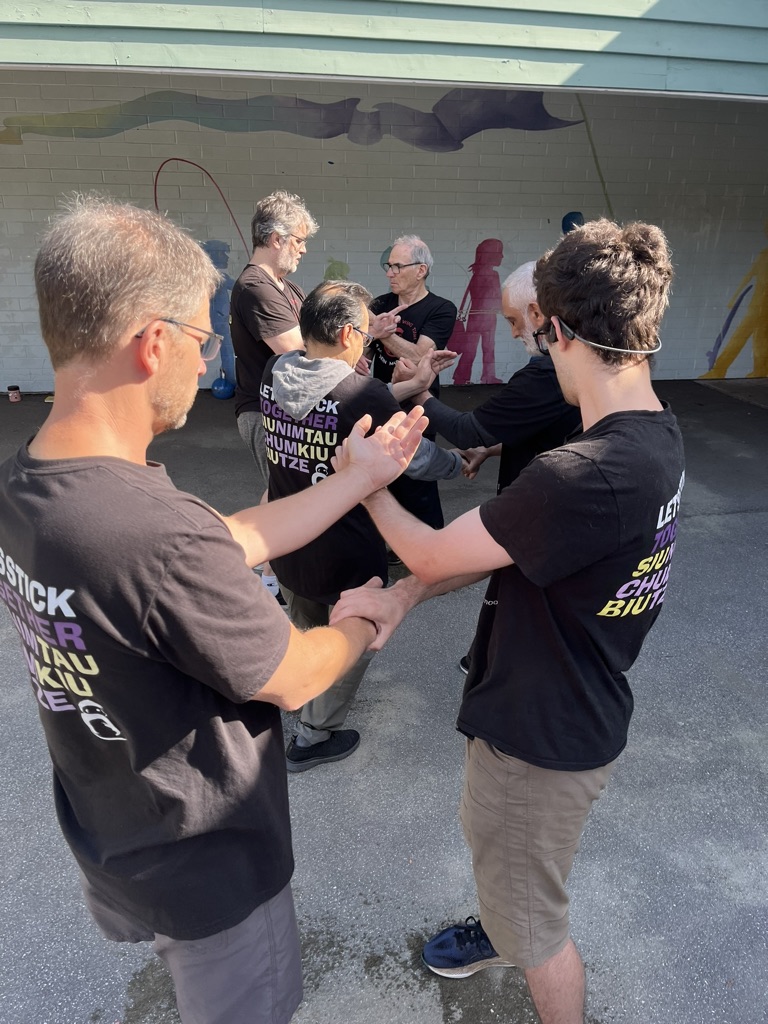
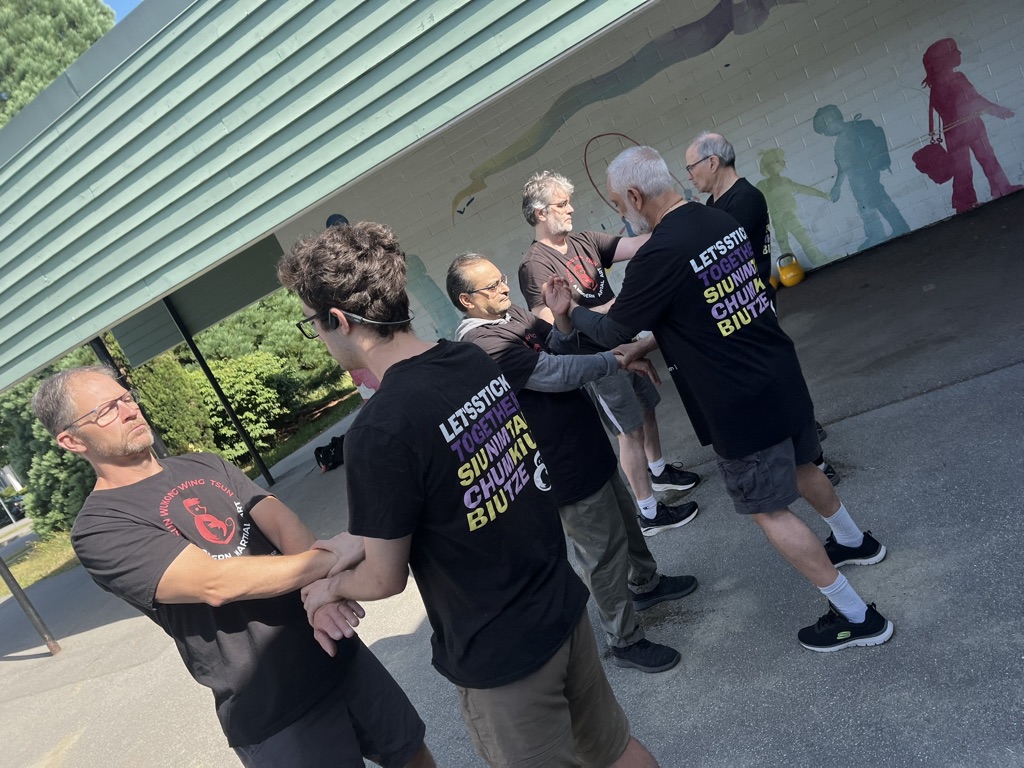
Direct Yip Man lineage
Yip Man → Leung Ting → Kernspecht → Ralph Hänel
Where we train
Kitsilano — 3214 West 10th Ave, Vancouver
Your first class
Free. No gear required.
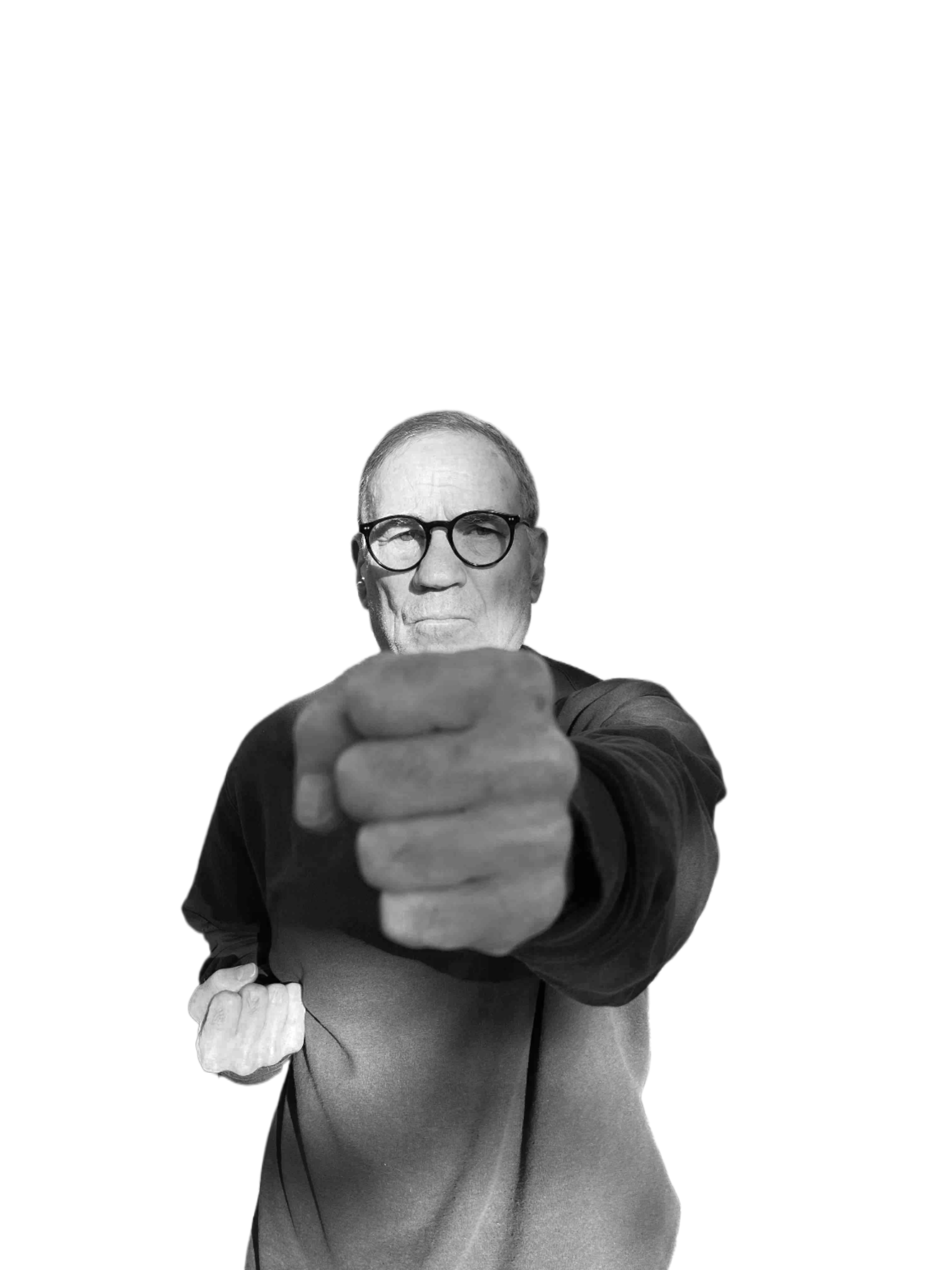
Most training peaks you at thirty and negotiates with you after that. Wing Tsun — known to most people as Wing Chun — runs the other way: it trades speed for structure and strength for sensitivity, so the practice keeps deepening while everything else is winding down. Sun Wukong Wing Tsun Kuen, 孫悟空詠春, in Kitsilano.
CrossFit until the shoulder went. Yoga that never quite got to the point. A striking gym where the twenty-four-year-olds set the pace and you spent the drive home doing maths about how long you could keep this up. None of it was wrong. It just wasn't built to be done for thirty years.
Wing Tsun spends its power on position rather than muscle. You learn to stand so the ground carries the load, to feel a person's intention through contact before you can see it, and to do less at exactly the moment most people do more. None of those decay at forty. They are the parts of you that keep sharpening while your fast-twitch fibres quietly retire.
"Most physical practices ask your body to perform. This one asks it to listen."
Twelve weeks on structure, breath, sensitivity and real-situation response. You'll be told what each movement is for before your body is asked to do it automatically — because a shape you don't understand is a shape you'll abandon the first time it's tested.
Book My Free First ClassIt needs more people who can stay calm. That's what this is a technology for, and it's the reason we teach it the way we do.
You're somewhere between thirty and sixty, you've got patience, and you want something you'll still be finding new layers in at seventy.
You want to spar in month one, compete, or collect certificates. Those are legitimate goals and Vancouver has excellent schools for them. This isn't one of them.
Nobody is, and it isn't the entry requirement. The first twelve weeks build the structure that fitness sits on, at a pace set by you.
Most of the people training here are between thirty and sixty. Age is the thing this art is designed around, not the thing it forgives.
BUDS trains twelve real situations from week one — choke, grab, bear hug, ground — under progressively increasing pressure. You'll find out whether it works on you, in class, rather than taking our word for it.
Nothing. Loose clothes you can move in. The first class is free.
You train. You're not sat on a bench watching, and you're not sold to afterwards.
Reading about contact sensitivity is like reading about swimming. One class will tell you more than this whole page did.
Book My Free First ClassFree · No gear required · No obligation to come back